
Overview
LinkedIn isn’t just a place to post a résumé. It’s one of the most effective tools small businesses can use to connect with the decision-makers who award commercial contracts.
Highlights
- • Why LinkedIn Is Different From Every Other Social Platform
- • How LinkedIn Helps Small Businesses Win Commercial Work
- • What Should a Small Business Post on LinkedIn?
- • FAQ
Introduction
When most business owners think about social media, Instagram and Facebook are usually the first platforms that come to mind. And there’s a good reason for that: they’re fantastic tools for sharing your work, connecting with your community, and building local awareness.
But there’s another often-overlooked platform that deserves a spot in your marketing plan. LinkedIn is something of a secret powerhouse, especially for businesses that work with other businesses.
Property managers, facility directors, general contractors, and procurement teams turn to LinkedIn to network, keep up with their industries, and research the vendors they’re considering hiring. That means the people who award commercial contracts may already be looking for businesses like yours, and LinkedIn is where they're doing a lot of that looking.
Fortunately, you don’t need to be a social media expert to make LinkedIn work for your business. In this guide, we’ll break down why LinkedIn is such a strong fit for B2B companies, how it helps small businesses win commercial work, and what kind of content attracts the right clients, whether you manage your presence in-house or with a marketing partner.
Why LinkedIn Is Different From Every Other Social Platform
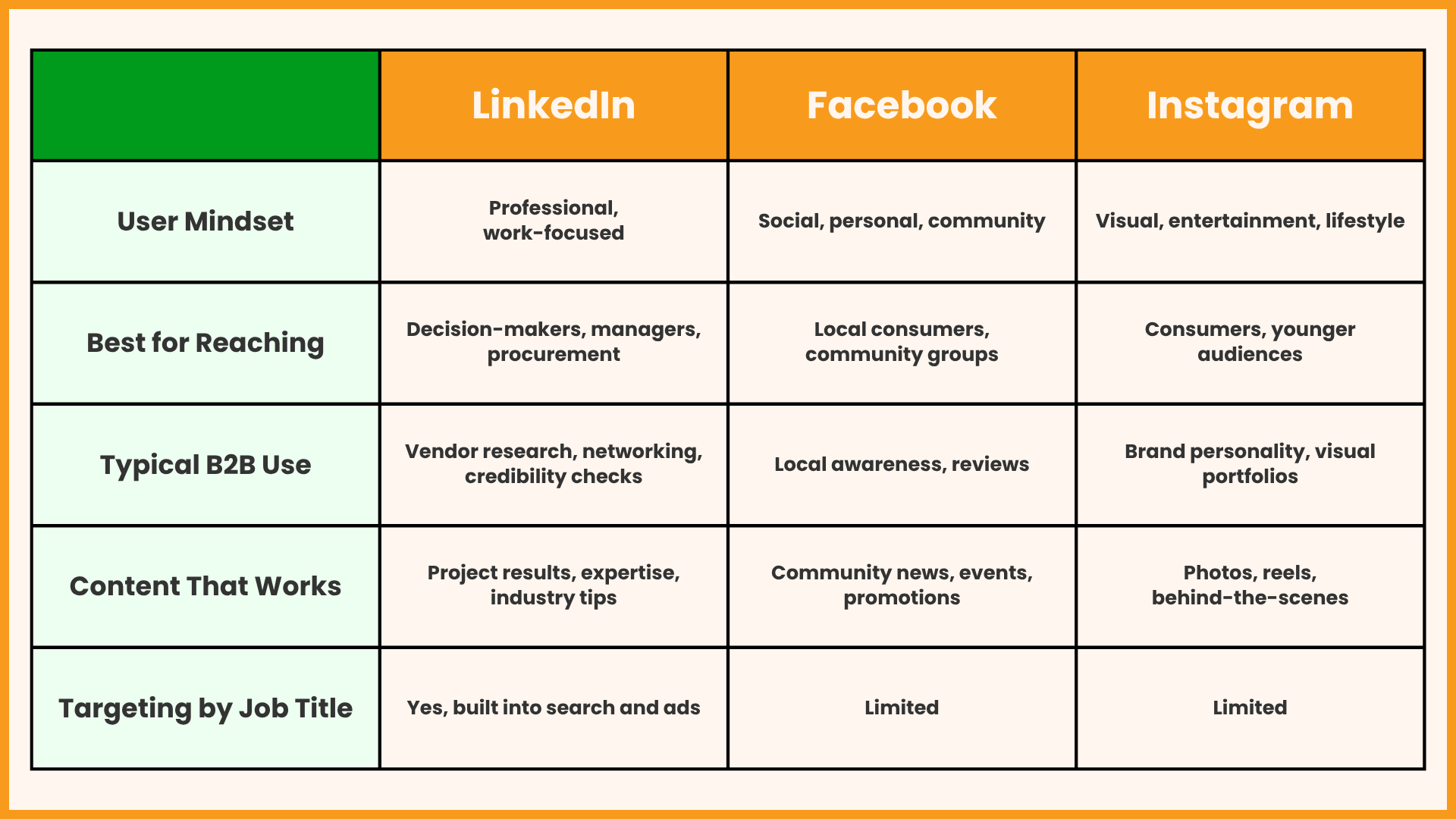
Every social media platform has its strengths. Facebook is fantastic for building local community and connecting with neighbors. Instagram is a natural showcase for eye-catching photos of your work.
LinkedIn, on the other hand, was built from the ground up as a professional network, which makes it a uniquely good fit for small businesses that serve commercial clients.
Here are a few things that set it apart and why it deserves a spot in your marketing plan if landing commercial contracts is your goal.
It’s Where Business Decision-Makers Actually Hang Out
The biggest difference between LinkedIn and other platforms isn’t the size of the audience. It’s who that audience is.
According to LinkedIn data, four out of five of its members drive business decisions, and the platform counts 63 million decision-makers and 10 million C-level executives. That “four out of five” figure is worth pausing on. It doesn’t just include the CEO or the owner who signs the contract. It also includes the managers, department heads, and committee members who shape which vendors get shortlisted in the first place.
For a small business, that’s a big deal. Think about who hires commercial service providers: property managers, facility directors, operations managers, general contractors, and procurement teams. These are exactly the kinds of professionals who keep an active LinkedIn profile, because it’s part of their job to stay connected in their industry.
In other words, when you post on LinkedIn, the person scrolling past your update isn't just a bystander. There’s a good chance they can hire you, recommend you, or put your name in front of the person who can.
The Scale Is Massive
LinkedIn may have a reputation as a quiet social network, but don’t let that fool you. The platform has grown to record levels of engagement, with over 1.3 billion members worldwide.
LinkedIn also describes itself as the world’s largest professional network, and the United States is one of its biggest markets by membership. So if you’re a U.S.-based small business, you’re not fishing in a small pond. You’re casting your line into the biggest professional pond on the planet, and it’s stocked with exactly the kind of leads you’re trying to catch.
People Come to LinkedIn in Work Mode
Picture two scenarios.
Scenario one: It’s Saturday morning. A facility manager is on the couch in her pajamas, coffee in hand, scrolling Facebook. She’s catching up on her sister’s vacation photos, watching a video of a dog riding a skateboard, and arguing (politely, she hopes) in the comments of a local restaurant review. Your ad for commercial floor care pops up. She scrolls right past it. It’s the weekend, and the last thing she wants to think about is the lobby floors at work.
Scenario two: It’s Tuesday at 8:45 a.m. That same facility manager is at her desk, opening LinkedIn before her first meeting. She’s reading an industry update, checking a post from a former colleague, and thinking about how her current cleaning vendor missed two service days last month. Then she sees your post with a before-and-after photo of floors your team restored in an office building, with a quick tip on extending the life of commercial carpet.
That time, she stops. She clicks on your profile. Maybe she even saves your page for later.
It’s the same person, but with a completely different mindset. On LinkedIn, people are actively thinking about their jobs, their problems, and the vendors who could solve them. That’s why a post that would flop on Instagram can start a real business conversation on LinkedIn. You’re not interrupting someone’s downtime; you’re showing up while they’re already in problem-solving mode.
LinkedIn vs. Facebook vs. Instagram for B2B at a Glance
How LinkedIn Helps Small Businesses Win Commercial Work
Landing commercial jobs usually comes down to three things: being found by the right people, being trusted by them, and being remembered when it’s time to hire. LinkedIn helps with all three. Here are the biggest benefits for small businesses that serve commercial and B2B clients.
It Builds Instant Credibility Before the First Call
Commercial buyers do their homework. Before a property manager invites you to bid or a general contractor adds you to their subcontractor list, there’s a good chance they’ll look you up online to make sure you’re legitimate, experienced, and easy to work with.
A complete and active LinkedIn profile answers those questions before anyone picks up the phone. When a prospect sees your service areas, recent projects, team members, and recommendations from past clients, your business immediately comes across as established and reliable.
For a small company competing against larger firms, that first impression can be the difference between getting shortlisted and getting overlooked.
It Positions You as an Expert
Thought leadership might sound like something reserved for keynote speakers and Fortune 500 executives, but for a small business, it really just means sharing what you know. And you know a lot.
That could look like:
- • A quick job-site tip, such as how often commercial HVAC filters should be changed
- • A before-and-after photo of a recent project with a short explanation of the challenge you solved
- • A lesson learned from a tricky job and what you’d recommend to other property managers
This kind of content pays off in a big way. Research from the 2025 Edelman-LinkedIn B2B Thought Leadership Impact Report found that 79% of hidden buyers are more likely to support proposals from vendors that regularly publish strong thought leadership. These “hidden buyers” are the people in finance, legal, compliance, procurement, or operations who may not use your product or sign the contract but still hold real power over whether you win the business.
It Keeps You Top of Mind for the Next Contract Cycle

Commercial work often runs on a calendar. Maintenance agreements renew annually, budgets get approved at set times, and bids open when the fiscal year turns over. The vendor who gets the call isn’t necessarily the cheapest. Often, it’s simply the one the decision-maker remembers.
Posting consistently on LinkedIn keeps your business visible year-round, not just when you’re actively chasing a contract. So when that property manager’s current vendor falls short, or when bid season rolls around, your name is already top of mind. A steady presence today can quietly set you up
for the contracts of tomorrow.
What Should a Small Business Post on LinkedIn?
Whether you manage your LinkedIn presence in-house or work with a marketing partner to handle it for you, the key is sharing that material in a way that’s helpful and relevant to the clients you want to reach.
Content Ideas That Attract Commercial Buyers
Not sure where to start? These five types of posts are easy to create and naturally appeal to property managers, facility directors, and other B2B decision-makers.
- • Project spotlights: Show off a recent job, whether it’s a freshly paved parking lot, a restored office lobby, or a completed rooftop HVAC install.
- • Quick answers to common questions: Think about the questions clients ask you over and over. Each one can become a short, helpful post.
- • Safety or compliance updates: A short post explaining a new code requirement, a seasonal safety reminder, or a certification your team recently earned shows that you take your responsibilities seriously.
- • Team introductions: People hire people. Introducing a crew leader, welcoming a new hire, or celebrating a work anniversary gives prospects a look at the professionals who will be showing up on their property.
- • Client reviews: A kind word from a satisfied commercial client is one of the most persuasive things you can post. Share a short testimonial alongside a project photo.
Use Visuals
A picture really is worth a thousand words, especially in industries where the results speak for themselves. According to LinkedIn’s own guidance, images typically result in a 2x higher comment rate.
That’s great news for small businesses in hands-on industries. You likely already have a camera roll full of job-site photos, so put them to work. A few tips to make your visuals shine:
- • Take before-and-after shots from the same angle so the transformation is easy to see
- • Snap photos in good lighting and keep the frame tidy
- • Include your team in action when possible, wearing branded gear if you have it
How Often Should You Post?
If you’re picturing yourself glued to your phone, posting every day between job sites, you can breathe a sigh of relief. Consistency matters much more than volume.
LinkedIn’s official data (linked in the previous section) shows that companies that post weekly see a 2x lift in engagement with their content. That means just one thoughtful post a week is a realistic and meaningful starting point, even for the busiest businesses.
Once you’ve built the habit, you can always post more often. But starting small and staying steady will do far more for your business than a burst of activity followed by months of silence.
FAQ
Is LinkedIn worth it for small businesses?
Yes, especially for businesses that serve commercial or B2B clients. For small businesses, LinkedIn is a cheap, direct way to build credibility and stay visible to property managers, facility directors, and other buyers who hire commercial service providers.
How long does it take to get results from LinkedIn?
LinkedIn is a long-term strategy, not an overnight fix. Results vary by industry and effort, but early signs like increased profile views and engagement typically appear before new business does. Because commercial sales cycles are often long, landing contracts can take several months of consistent posting and genuine engagement.
Is LinkedIn Premium necessary for lead generation?
No. Small businesses can win commercial work using LinkedIn’s standard features, including a Company Page, personal profiles, posting, and messaging connections. Paid tools like LinkedIn Premium or Sales Navigator can add advanced search filters and more messaging options, so they may be worth testing once your foundation is in place and you’re ready to scale outreach.
Start Winning More Commercial Jobs With LinkedIn
Your next commercial client is probably already on LinkedIn, and a consistent presence filled with helpful, genuine content helps your business earn that trust long before bids open.
Want help turning LinkedIn into a steady source of commercial leads? LinkNow can manage your LinkedIn presence from start to finish, so you can stay focused on running your business. Contact us to talk through your social media and SEO strategy.