
Selling insurance has always been about trust. You’re asking people to hand over personal details and rely on you during some of the worst moments of their lives. Earning that trust online is even harder.
Enter our client: a family-owned independent insurance brokerage serving Pittsburgh and the surrounding area. When the agency’s owners first reached out to us, they were frustrated. Their website sat on page three of Google for nearly every search that mattered, and they couldn’t keep up with big-name carriers and national comparison sites. Paying for Google Ads had turned into an expensive guessing game, and their attempts at blogging had completely stalled.
Their situation isn’t unusual. Insurance is one of the toughest industries for SEO.
In this case study, we’ll walk through exactly how we helped this brokerage turn things around. Let’s start by looking deeper into the specific challenges they faced.

Google Treats Insurance Content Like a Medical Diagnosis
Google sorts certain topics into a category it calls “Your Money or Your Life,” or YMYL. These are subjects where bad information could seriously hurt someone’s finances, health, or safety. Insurance is squarely in that category. If a blog post gives the wrong advice about flood coverage and a family in Etna skips a policy they needed, the consequences are real. Google knows this, so it holds insurance websites to a much higher standard than, say, a bakery’s blog.
When we audited our client’s website, the important trust signals that Google looks for were mostly missing. Their website didn’t mention the team’s licenses, certifications, or decades of experience. To Google, the site looked about as credible as an anonymous forum post, and it ranked that way, sitting on page three or lower for nearly every valuable search term.
Every Word Has To Pass a Compliance Check
Most small businesses can publish a punchy headline like “Save 40% Today!” without a second thought. An insurance broker can’t. In Pennsylvania, insurance advertising falls under the Pennsylvania Insurance Department and the state’s Unfair Insurance Practices Act, which prohibits misleading statements about coverage, pricing, or benefits. A savings claim needs to be accurate and supportable, and a promise that a policy “covers everything” can create legal exposure if a claim is later denied.
On top of state rules, the carriers our client represents have their own marketing guidelines. Some require approval before their name or logo appears in promotional content. Some restrict how products can be described. That meant a simple blog post comparing homeowners policies could take time to clear review, and social media posts couldn’t be dashed off on a whim.
Competing Against National Giants and a Big Trust Gap
When a Pittsburgher searches “home insurance quotes,” they aren’t just seeing local brokers. They’re seeing national comparison sites, lead-generation platforms, and household-name carriers with enormous advertising budgets. Our client was a small independent shop trying to stand out in a crowded field.
Paid ads weren’t an easy fix either. Insurance keywords are among the most expensive on Google Ads, and a single click on a competitive term can cost more than a nice lunch. For a brokerage with a modest marketing budget, buying traffic wasn’t sustainable.
Then there’s the human side. People don’t buy insurance on impulse. They’re handing over personal details, home addresses, driving records, and sometimes medical histories, and they’re trusting someone to be there when a pipe bursts or a car slides down an icy hill. Before reaching out, prospects want proof that a broker is real, local, and reliable.

A Marketing Package Built for Consistency
Insurance clients are won over time, so we set our client up with our Elite 40 marketing package to keep them visible month after month. The package combined regular blog content, a steady schedule of social media posts across Facebook, LinkedIn, and Instagram, ongoing Google Business Profile management, and monthly performance reporting.
Each part had a clear job. The blog posts targeted local, high-intent searches and built topical authority over time. Social media content turned those same insights into shorter, friendlier posts, like a quick winter driving reminder before the first snow or a “did you know?” about renters insurance timed for the start of the college semester.
A Streamlined Approval Workflow That Kept Content Moving
This was the change our client noticed most. Before working with us, a single blog post could sit in someone’s inbox for weeks while different people traded edits over email. We replaced that with a simple, predictable approval workflow.
We also established clear turnaround times. Social media posts were batched once a month, so the owner could approve a whole month of content in one short sitting. Blog posts and website updates had a set review window, and a quick reminder went out before any deadline passed.
To cut down on back-and-forth even more, we worked with the team to build a short list of pre-approved language. Standard disclaimers, approved ways to describe coverage, and phrases to avoid (like “guaranteed lowest rates”) were all written down in one place. Once the team trusted that our drafts already followed these rules, approvals sped up dramatically. Content that once took weeks to publish was going live within days.
Turning Local Reputation Into Online Proof
The final step was to make our client’s real-world reputation visible online. We completed and optimized their Google Business Profile with accurate service areas, business categories, hours, and a full list of the insurance products they offer.
We also helped the agency set up a simple review request process. After a policy was bound or a claim was settled smoothly, clients got a short, friendly follow-up message with a direct link to leave a Google review. Every review received a personal response. We kept the process compliant by never offering incentives for reviews and by keeping responses free of policy details or personal information.
Finally, we cleaned up the agency’s listings across local directories, insurance association websites, and community organizations so their name, address, and phone number matched everywhere. Small inconsistencies can confuse Google about which business is which, and fixing them helped the agency show up more reliably in the local map results that Pittsburgh searchers see first.

From Page Three to Unmissable
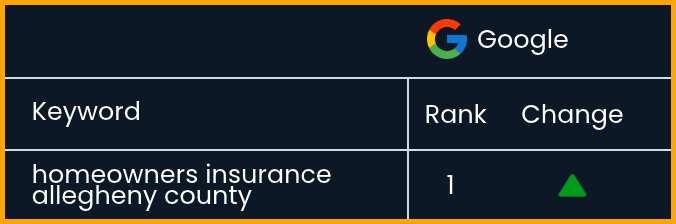
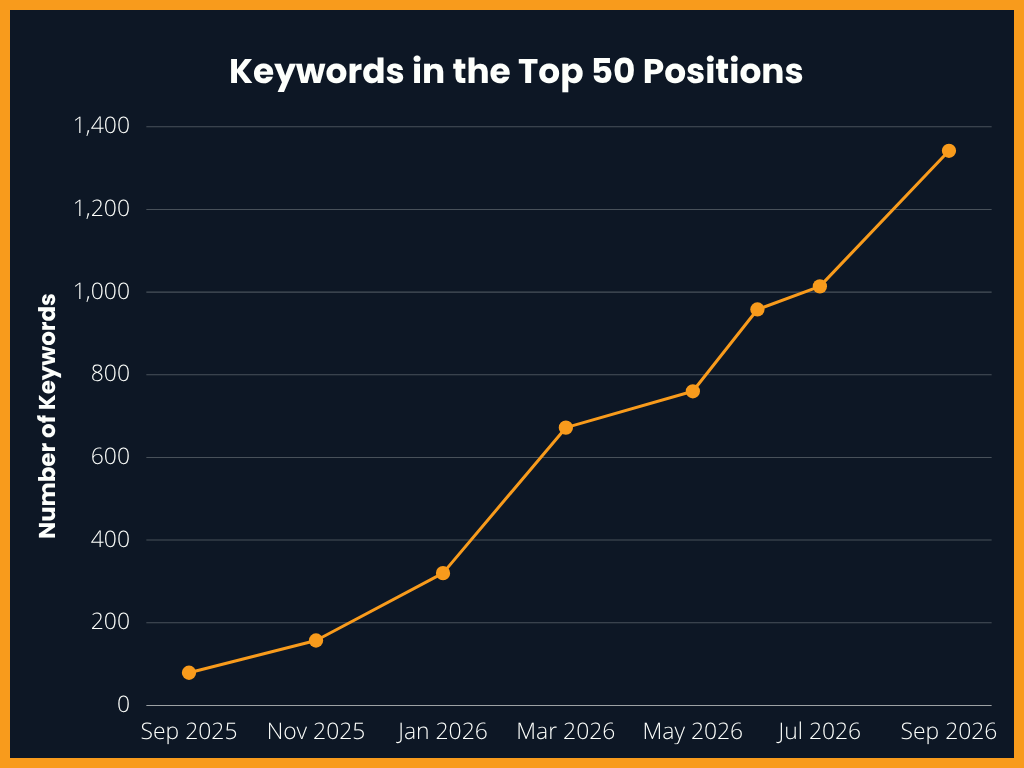
When we started, our client didn’t rank on page one for a single high-value insurance term in Pittsburgh. Within 12 months, they ranked on the first page for 56 local keywords, including competitive searches like “independent insurance agent Pittsburgh,” “small business insurance Pittsburgh,” and “homeowners insurance Allegheny County.” Eleven of those keywords reached the top three positions, where most searchers actually click.
Organic traffic followed. Monthly visits from search grew from about 1,100 to 3,900, an increase of 255%. A lot of that growth came from the question-based blog posts. One article became the site’s top-performing page, bringing in 620 visitors a month and ranking for more than 40 related searches that we never directly targeted. That’s what happens when Google starts treating a site as a real authority on a topic.
Showing Up in the Map Pack
For a local broker, the map results at the top of Google are prime real estate. After we optimized the Google Business Profile and cleaned up the agency’s directory listings, our client began appearing in the local map pack for searches across their local neighborhood.
Activity on the Business Profile itself reflected that boost. Profile views rose, calls placed directly from the listing increased, and requests for directions to the office went up. Those numbers matter because people who call from a map listing are usually ready to talk about coverage right away.
A Reputation That Finally Matched Reality
At the start of our work, the agency had 9 Google reviews. Thanks to the simple review generation tool, they reached 54 reviews within 12 months, with an average rating of 4.9 stars. Many reviewers mentioned specific brokers by name and described real experiences, like getting help with a claim after a storm or finding better coverage for a growing business.
Those reviews gave hesitant prospects the reassurance they needed before sharing personal information. The brokers began hearing a new line on intake calls: “I read your reviews, and I wanted to work with someone local.”
From Delays to Consistent, Compliance-Approved Content Publishing
Previously, publishing a single blog post could take months, and some content never went live at all. With LinkNow’s content team managing content creation, the client was able to maintain a consistent flow of blog posts, social media content, and business updates throughout the year. Every piece of content successfully passed compliance review, with no concerns raised by regulators or carrier partners.
More Calls, More Quotes, More Policies
All of this ultimately had to lead to new business, and it did. Quote requests from the website rose roughly 80%. Inbound phone calls tied to organic search and their Google Business Profile grew too. Most importantly, the agency set an annual record for new policies written.
The agency also saved money on paid ads. With organic search producing a steady stream of qualified leads, they cut their Google Ads budget while still bringing in more new clients than the year before. In an industry where every click matters, that’s a real return.

- • Your team’s expertise is your biggest SEO asset, so put it on display: Google holds insurance content to a higher standard, and anonymous, generic blog posts won’t meet it. Adding licensed broker bios and answers to real client questions turned our client’s existing knowledge into the trust signals Google was looking for.
- • Local, specific content beats broad, generic content every time: A post about basement backup coverage for older Pittsburgh homes did far more than another “Why You Need Insurance” article ever could. When your content reflects the neighborhoods, housing stock, weather, and businesses you actually serve, it attracts searchers who are ready to buy.
- • Compliance doesn’t have to slow you down if you build a system around it: A streamlined vetting process and a library of pre-approved language cut publishing time significantly. Being careful and being consistent aren’t opposites once everyone knows the rules and the process.
- • Reviews and a complete Google Business Profile close the trust gap: People hesitate to share personal and financial details with a stranger. Getting fresh Google reviews and keeping the profile active with photos and updates gave prospects the reassurance they needed to pick up the phone.
- • Consistency over time is what turns SEO into new business: No single blog post or social update transformed this agency’s results. Twelve months of steady publishing, supported by the right marketing package, built the authority that brought in new policies.
Your Expertise Deserves to Be Found Too
Insurance brokers play by a tougher set of rules online. Google expects more proof of expertise, regulators and carriers review every claim you make, and prospects need real reassurance before they share personal details with you. For our Pittsburgh client, those hurdles had kept years of local experience hidden from the people searching for it.
With professionally written content, a consistent marketing package, a streamlined approval process, and a reputation that finally showed up online, this agency went from page three to a steady stream of calls, quotes, and new policies in just twelve months.
Every business is different, but the lessons hold up across industries. If your expertise isn’t showing up where your customers are searching, it might be time for a fresh approach. At LinkNow, we help small businesses build a digital presence that earns trust and drives results. When you’re ready to talk about what that could look like for you, we’d love to hear from you.